Deep Learning + Model Analysis · Public Kaggle Experiments
MNIST CNN Experiments
Controlled Deep Learning Comparison
A controlled PyTorch comparison of CNN architectures for handwritten digit classification, focused on the effect of Batch Normalization on accuracy, loss behavior, runtime, and prediction quality.
OVERVIEW
A controlled CNN experiment centered on Batch Normalization
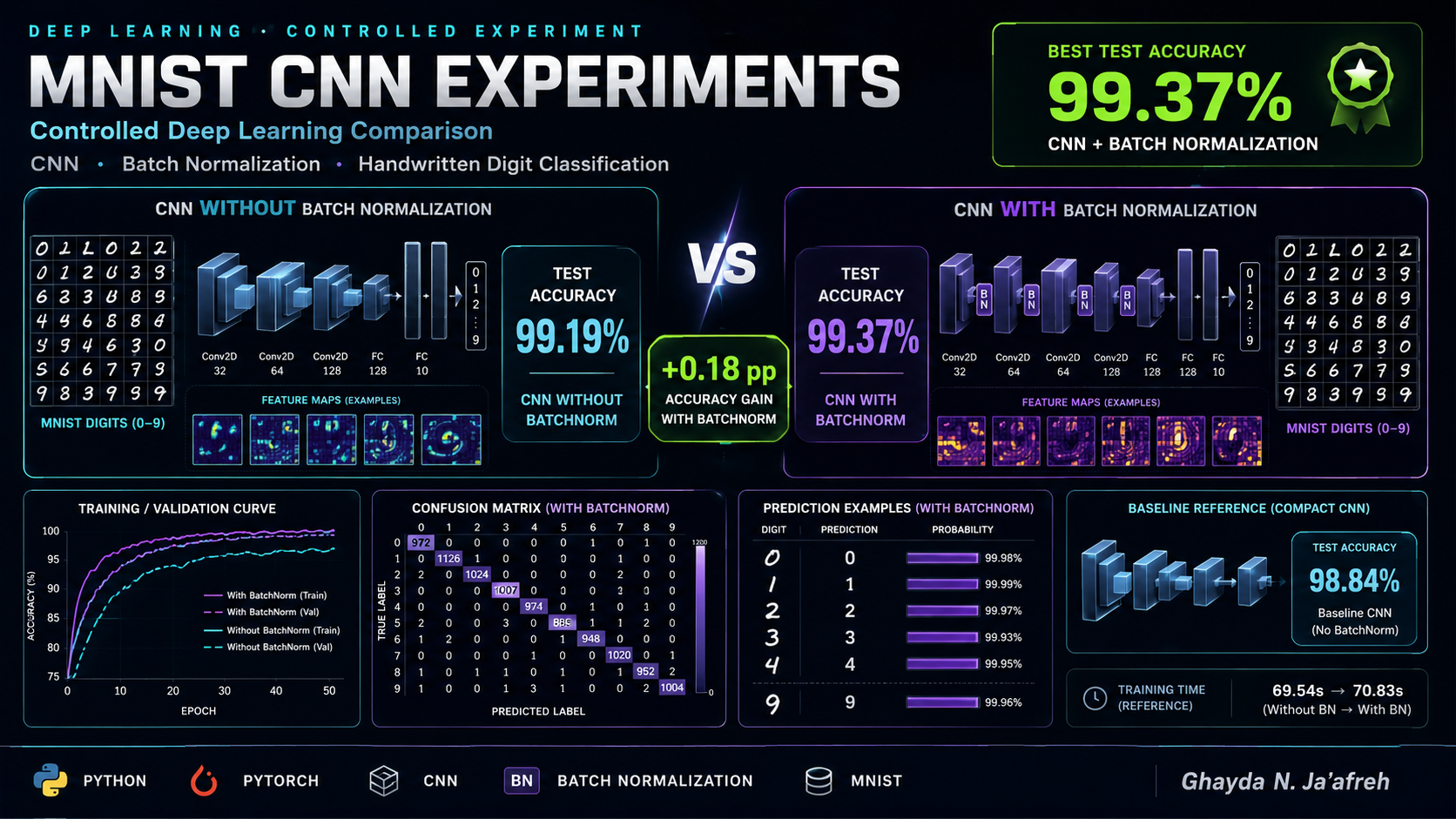
This project combines two MNIST notebooks into one focused deep-learning case study. The first establishes a compact CNN baseline, while the second performs a controlled comparison between closely matched CNN architectures with and without Batch Normalization.
The comparison keeps the task and overall training setup aligned so the effect of Batch Normalization can be examined through accuracy, loss behavior, runtime, confusion matrices, and prediction examples.
EXPERIMENT STRUCTURE
CONTROLLED COMPARISON
Same classification task, one deliberate architectural change
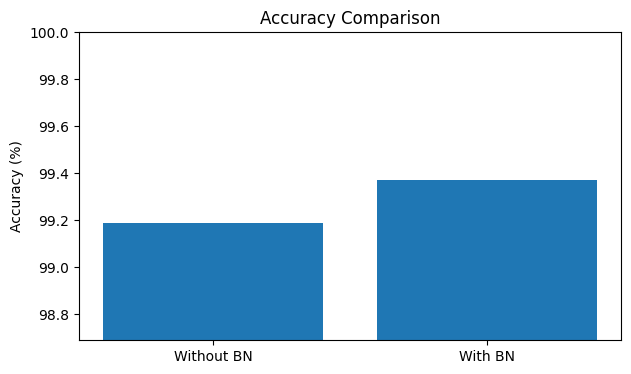
Convolutional architecture trained without BatchNorm layers to establish the comparison reference.
99.19% Test AccuracyBatchNorm layers are introduced while preserving the same task and comparable training conditions.
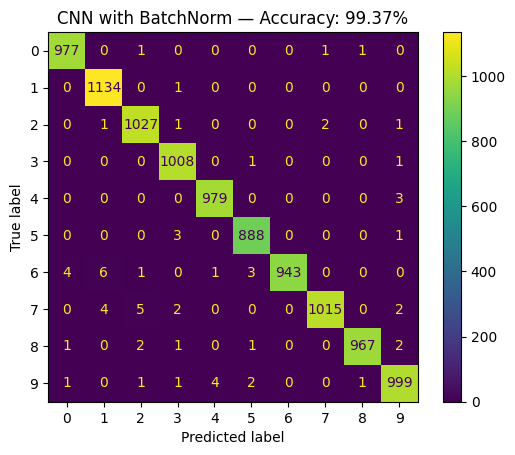
99.37% Test AccuracyRESULT AT A GLANCE
The corresponding no-BatchNorm training time in the notebook is 69.54 seconds, so the accuracy improvement came with only a small runtime increase in this experiment.
BASELINE CONTEXT
A separate compact CNN experiment anchors the progression
The earlier MNIST notebook provides additional baseline context with a compact PyTorch CNN that achieved 98.84% test accuracy. It also includes feature-map inspection, confusion-matrix analysis, standard test predictions, and custom handwritten digit examples.
WHAT THIS PROJECT DEMONSTRATES
- Controlled architecture comparison
- Batch Normalization as an isolated experimental factor
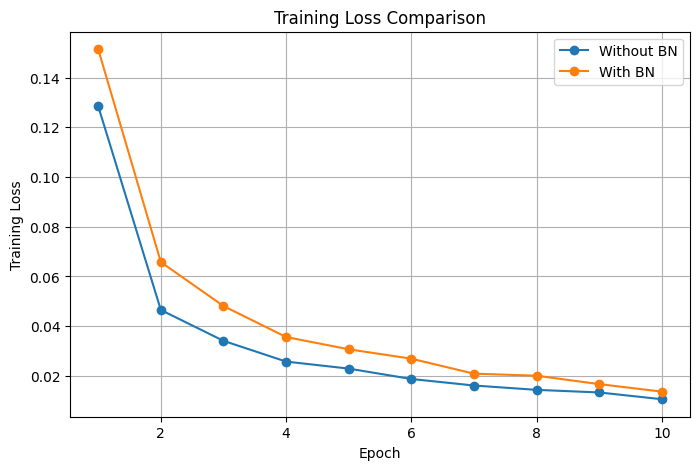
- Training-loss and runtime analysis
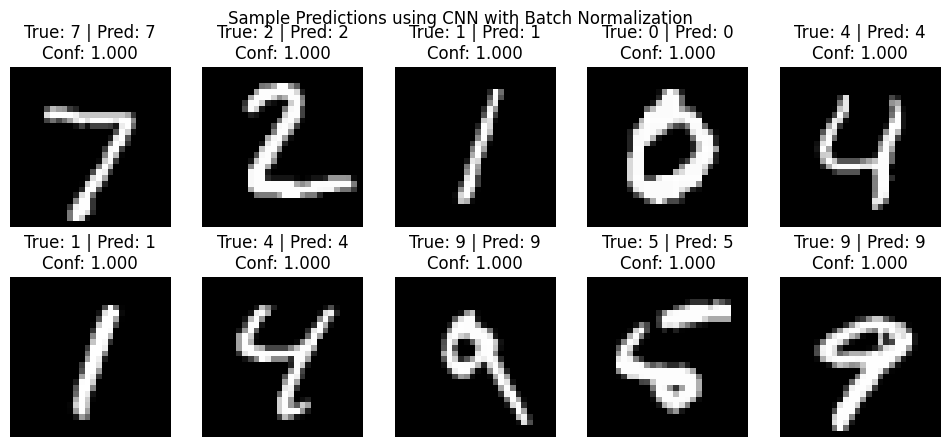
- Confusion-matrix and prediction inspection
- Feature-map visualization in a compact CNN
PROJECT GALLERY
Evidence from both completed MNIST notebooks
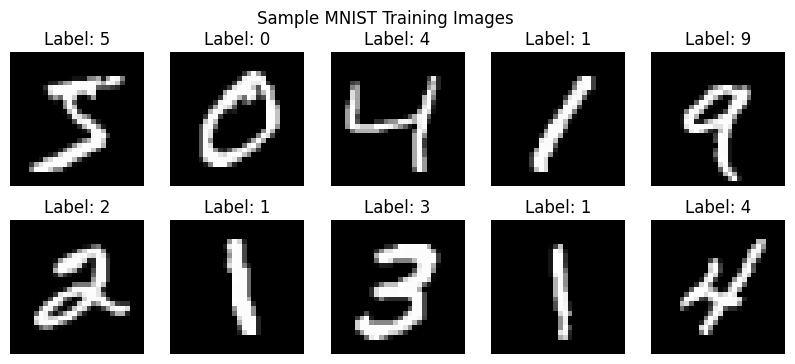
These figures are taken directly from the uploaded notebooks and show the data, model comparison, training behavior, feature maps, evaluation, and prediction examples.
 Open full size ↗
 Open full size ↗
 Open full size ↗
 Open full size ↗
 Open full size ↗
 Open full size ↗
 Open full size ↗
INTERPRETATION
The value is in the comparison, not just the final percentage
MNIST accuracy is already high for compact CNNs, so the portfolio value of this project is the controlled experimental design. The notebooks make it possible to compare a standard CNN, a no-BatchNorm reference, and a BatchNorm variant while inspecting both quantitative and visual evidence.
TECH STACK
PUBLIC NOTEBOOKS
Explore both MNIST experiments on Kaggle.
The two public notebooks provide the compact CNN baseline and the focused Batch Normalization comparison that are combined in this portfolio case study.